
Maintenance Kayak Maintenance Kayak Storage
How to Properly Store and Maintain Your Kayak Year-Round
A kayak is an investment — often a significant one. A few hours of proper storage and maintenance each year can double or triple its lifespan. Here’s how to take care of your boat so it’s ready to go when you are.
Storage: The Most Important Thing You’ll Do
Where and how you store your kayak matters more than most paddlers realize. Improper storage — leaving it on the ground, leaning it against a wall by one end, or exposing it to prolonged UV — is the fastest way to shorten its life.
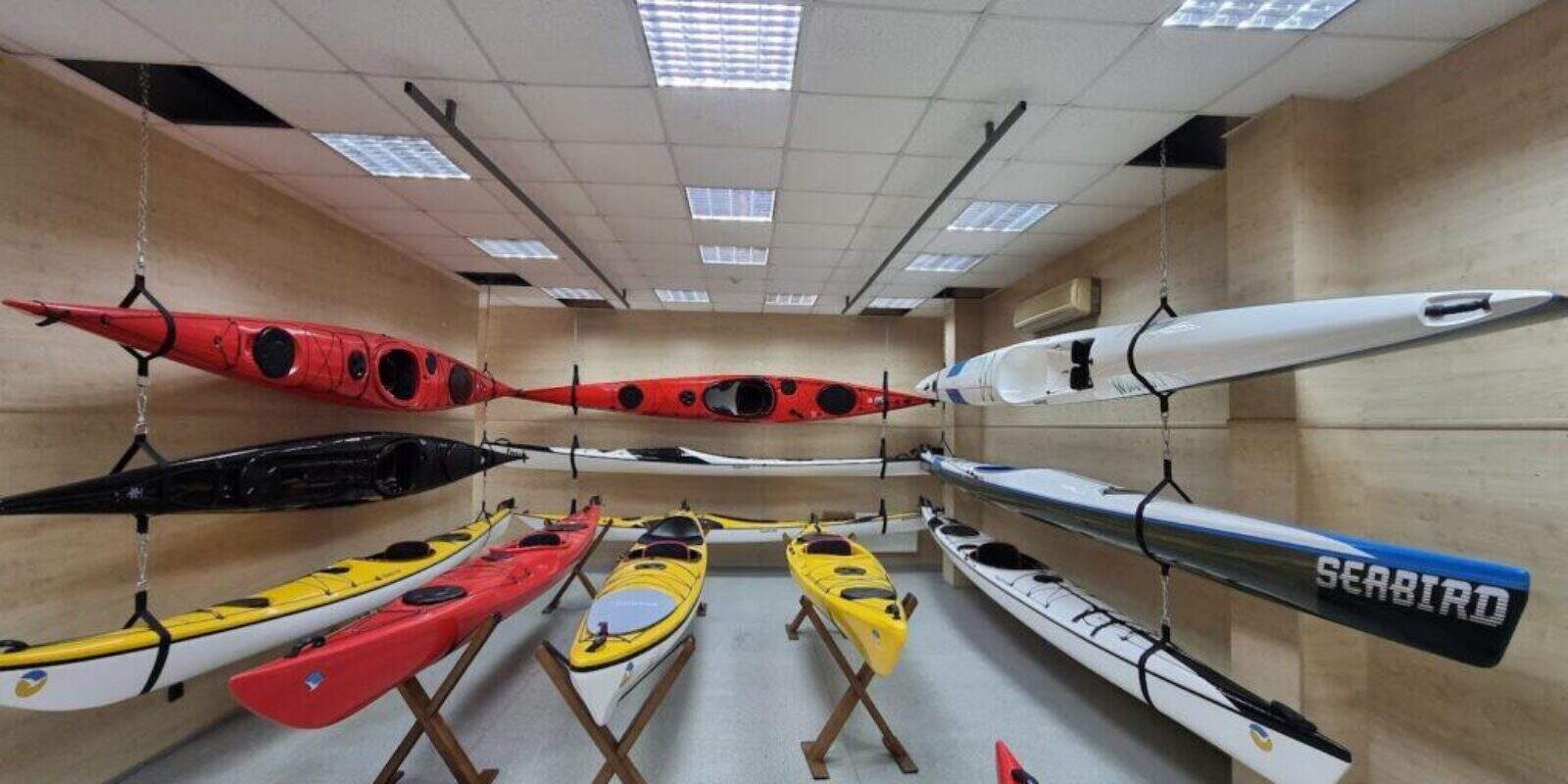
- Store off the ground. Contact with dirt, concrete, or damp surfaces leads to mold, warping, and gelcoat damage. Use wall-mounted racks, ceiling hoists, or dedicated kayak stands.
- Support the hull, not the ends. A kayak supported only at its ends puts stress on the center and can cause it to deform over time. Support points should be within 1–2 feet of the ends, with the hull resting on a broad, padded surface.
- Keep it flat or hanging. Storing a kayak on its side for extended periods can cause the hull to deform. The ideal is flat (on its bottom) or suspended from a ceiling hoist with straps at the bow and stern.
- Protect from UV. Both polyethylene and composite kayaks degrade under prolonged sun exposure. Store in a shaded area, use a kayak cover, or wrap it in a tarp.
- Climate-controlled is ideal. Extreme heat and freeze-thaw cycles stress materials. A garage, basement, or covered storage shed beats outdoor storage, even with a cover.
Cleaning Your Kayak
Clean your kayak at least twice a year — at the start and end of paddling season. More frequently if you paddle in saltwater.
- Rinse with fresh water after every saltwater or muddy outing. Salt accelerates corrosion and degrades materials.
- Use mild soap and water — nothing abrasive. A soft cloth or sponge is all you need.
- Pay attention to scuppers, drain plugs, and hardware. Salt and grit accumulate in crevices.
- Clean the cockpit: remove the seat, spray down the inside, and let it dry completely before reassembling.
- For composite boats: inspect the hull for any chips, cracks, or delamination — especially after rocky landings or log strikes.
Polyethylene (Plastic) Kayak Maintenance
- UV damage: Plastic kayaks chalk and become brittle with UV exposure. A UV-protectant spray (like 303 Protectant) applied annually helps.
- Scratches: Minor scratches can be heated with a heat gun and smoothed out. Deep gouges may need plastic welding.
- Dents: Sunlight can be used to carefully heat and reshape minor dents.
Composite Kayak Maintenance
- Gelcoat chips: Fill with marine gelcoat and sand smooth. Left untreated, water gets under the chip and causes delamination.
- Cracks: Hairline cracks (usually from impact) should be assessed by a professional. Don’t paddle a composite boat with unresolved cracks.
- Storage: Even more sensitive to long-term deformation than plastic. Always store flat or suspended.
Inflatable Kayak Care
- Deflate fully before storage. Rolled tight for months can weaken seam adhesives.
- Store in a dry place — moisture trapped in folds leads to mold.
- Check for pinhole leaks with soapy water spray before the season starts.
- Keep away from sharp objects and rodents (they love to chew PVC).
End-of-Season Checklist
- ✅ Deep clean (inside and out)
- ✅ Inspect hull for damage
- ✅ Check hardware (rivets, bolts, cleats)
- ✅ Apply UV protectant
- ✅ Lubricate metal parts (if applicable)
- ✅ Store properly (off ground, shaded, supported)
- ✅ Remove seat and store separately
Your kayak will thank you. A well-maintained boat lasts 15–20 years or more. A neglected one? You’ll be shopping for a replacement in five.