
Kayak Fishing for Beginners: The Complete Guide to Gear, Techniques, and Best Spots
Kayak fishing is one of the fastest-growing outdoor activities in America — and for good reason. Being silently positioned in skinny water, accessing coves and creeks that boats can’t reach, and the inherent portability of a kayak make it an incredibly effective fishing platform. But the learning curve is real. Here’s everything you need to know to get started.
Why Kayak Fishing?
Before the gear, let’s understand why kayak fishing works so well. Kayaks put you in water that’s inaccessible to traditional boats — skinny creeks, shallow flats, backwater sloughs, and narrow channels. You can cast into spots that bass boats and bay boats simply can’t reach. And the silence of a paddle means you don’t spook fish.
- Access: Get into spots other boats can’t. Shallow water, tight channels, no-boat zones.
- Stealth: No motor noise, no vibrations. Fish don’t know you’re there.
- Cost: A complete kayak fishing setup costs $500-$2,000. A bass boat costs $20,000-$80,000.
- Portability: Fish any water. Lake, river, ocean, pond. Load up and go.
- Exercise: Kayak fishing is active. You’re paddling, casting, and moving. It’s a full-body workout disguised as fishing.
Choosing the Right Fishing Kayak
Any kayak can be used for fishing, but dedicated fishing kayaks have features that make a real difference:
- Rod holders: Usually 2-4 integrated mounts on the deck. Essential for trolling or when you need hands-free rod storage.
- Stability: Fishing requires some stillness. Wider, flatter kayaks offer better primary stability for casting and reeling.
- Storage: Dry compartments for tackle, live wells for bait, and flat deck space for tackle management.
- Sit-on-top vs. sit-inside: Sit-on-top is the overwhelming standard for kayak fishing. Easier to cast, easier to get in and out, and safer if you capsize.
- Pedal drive vs. paddle: Pedal-driven kayaks (Hobie, Old Town, etc.) let you keep your hands free for fishing. They’re more expensive but dramatically increase your fishing effectiveness.
- Width and length: Wider = more stable. Longer = faster and more efficient. Fishing kayaks are typically 10-13 feet long and 30-34 inches wide.
Essential Gear Beyond the Kayak
Your kayak is just the platform. Here’s what you need to actually fish from it effectively:
- Personal Flotation Device (PFD): Non-negotiable. Choose a fishing-specific PFD with pockets for tackle and tools — you’ll wear it all day.
- Paddle leash: Keeps your paddle from drifting away when you’re focused on a fish or re-rigging.
- Anchoring system: A push-pin anchor or drag chain lets you hold position in wind or current. Anchor trolleys are invaluable for adjusting position without moving the anchor.
- Dry bag: For phone, keys, snacks, and anything else you can’t afford to lose to the water.
- Fish finder/GPS: Not strictly essential, but a fish finder dramatically increases your productivity. Many affordable units are designed specifically for kayaks.
- Tackle management: Rod holders, a crate system, or milk crate with rod holders mounted. Get your tackle organized so you can grab what you need without fumbling.
- Net: A small landing net makes landing fish much easier and safer.
- Lighted rod tip: LED light attached to rod tip for dawn/dusk fishing. Catches your eyes and keeps line visible.
Kayak Fishing Techniques
Drift Fishing
Let the wind and current move you. Cast perpendicular to your drift path and work your lure back. This covers the most water efficiently and works in moderate wind.
Pole and Cork
Use your paddle as a positioning tool. Plant the paddle in the bottom in shallow water and pull yourself to casts. Essential technique for sight fishing on shallow flats.
Trolling
Run 1-2 rods with slow-moving lures behind you. Fishing kayaks can handle light trolling setups. Keep lure speed at 1-3 mph for most species.
Still Fishing (Anchoring)
Anchor up in a likely spot — rip rap, weed edges, points — and wait. Works best when you know fish are present in the structure.
Sight Fishing
In clear water, the kayak puts you at eye level with the fish. Stand up (if your kayak allows) and cast sight-lined casts to visible fish. This is one of the most exciting ways to fish from a kayak.
Best Beginner Destinations
- Local ponds and lakes: Start close to home. Small, calm water lets you focus on fishing without worrying about conditions.
- Saltwater flats: Redfish, snook, and sea trout in Florida, Texas, and the Carolinas. Gin-clear water lets you see fish — and see hazards.
- Tidal creeks and rivers: Excellent for largemouth bass, stripers, and flounder. Access creeks inaccessible from shore.
- Reservoirs: Often underrated for kayak fishing. Points, humps, and creek channels hold fish, and you can often avoid boat traffic.
- Small bass ponds: Many municipal park ponds are overlooked gems. Stocked with bass and panfish, with no boat traffic at all.
Safety Notes for Kayak Anglers
- Tidal water: Always know the tide state and current direction before you launch. Getting caught by a strong outgoing tide in a kayak is dangerous.
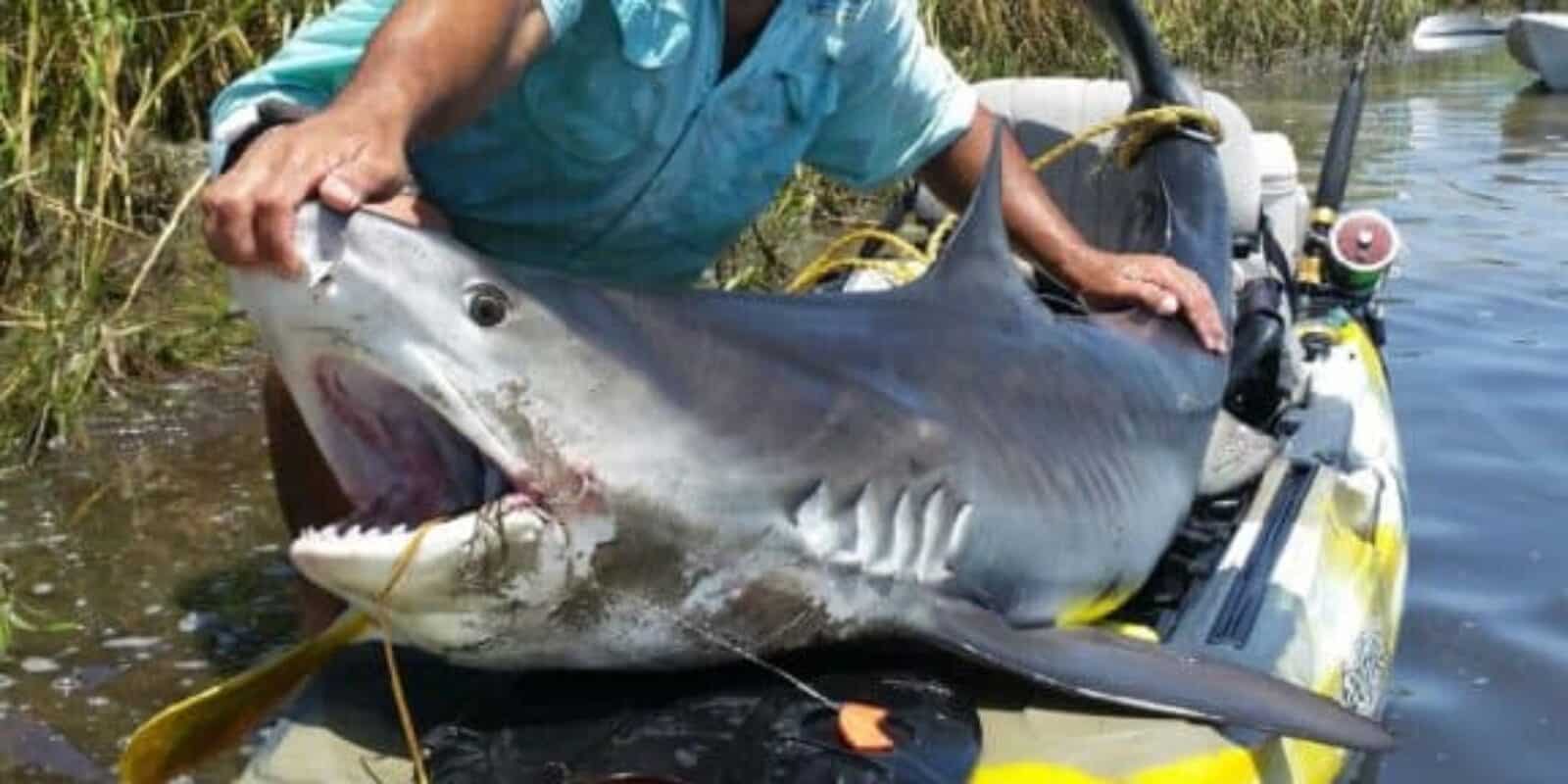
- Marine life: Be aware of alligators (southeast US), sharks (everywhere), and sea lions (west coast). Don’t wade in alligator territory.
- Sun protection: Hours on open water in a kayak mean serious sun exposure. Buff, hat, UV shirt, and sunscreen are essential.
- Hook safety: Consider single hooks over treble hooks when kayak fishing. Treble hooks become a serious hazard in confined spaces.
- Weather: Check forecast before launching. Kayak anglers are more exposed than boaters to sudden weather changes.
- Communication: Carry a phone in a waterproof case. Tell someone your float plan.
Getting Started on a Budget
You don’t need $5,000 in gear to start kayak fishing. Here’s a realistic beginner budget:
- Kayak: $300-$600 for a sit-on-top fishing kayak (Pelican, Perception, Lifetime brands)
- Paddle: $50-$100
- PFD: $40-$80
- Tackle: $30-$50 (bring what you already have)
- Rod holders: $10-$30 each
- Total: $430-$860 for a solid starter setup
Start simple. Borrow or rent a fishing kayak first, load a basic tackle box, and get out on the water. You’ll quickly figure out what you need more of — and what you can live without.
Pedal Drive Kayaks: Hands-Free Fishing
Pedal-driven kayaks have revolutionized kayak fishing. Instead of paddling, you pedal with your feet using a propeller or fins mounted under the hull. This keeps your hands completely free for fishing.
How Pedal Drives Work
- MirageDrive (Hobie): Two flapping fins on a central axis. Extremely efficient, works in shallow water. The 180 model allows reversing with a lever.
- Propeller drives: A propeller shaft from a pedal mechanism in the cockpit. Used by Old Town, Bonafide, and Native Watercraft.
Pedal Drive Advantages
- Hands completely free — fish while moving
- Faster than paddling (4-6 mph vs. 3-4 mph)
- More efficient for long days on the water
- Better for fighting fish — pedal to follow a hooked fish
- Less fatigue on arms, shoulders, and hands
Pedal Drive Disadvantages
- Significantly more expensive ($2,000-$5,000+)
- Heavier — most pedal kayaks weigh 80-110 lbs
- Requires trailer or strong roof rack
- More mechanical components to maintain
Top Pedal Drive Kayaks
- Hobie Outback: The benchmark. MirageDrive 180, extremely stable, tons of storage.
- Hobie Pro Angler: Hobie’s premium fishing platform. Incredibly stable, rod holders everywhere.
- Old Town Sportsman PDL: Excellent propeller-drive. Lighter and more affordable than Hobie.
- Bonafide SS127: Affordable pedal-drive option. Great entry point to pedal fishing.
Lure Selection for Kayak Fishing
Soft Plastics
- Texas rig: Weedless presentation. Hook a worm or creature bait, peg the hook point into the body. Cast into structure. The most versatile kayak fishing rig.
- Neko rig: Weighted wacky rig. Nail weight in the head of a senko makes it sink nose-first with subtle wiggle. Excellent for pressured fish.
- Shad tails: Paddle-tail plastics on jigheads. Mimics baitfish. Great for bass, walleye, redfish, sea trout.
- Creature baits: Curly-tail worms, crawfish imitations. Texas rigged or Carolina rigged for maximum vibration.
Hard Baits
- Crankbaits: Diving plugs that wobble and deflect off structure. Match diving depth to where fish are holding.
- Spinnerbaits: Flash and vibration attract fish in stained water. Very forgiving of imperfect casts.
- Jerkbaits: Minnow-shaped lures. Twitch-twitch-pause retrieves deadly on bass and pike in cool water.
- Spoons: Flutter on the fall. Excellent for trout, salmon, and pike.
What to Do When You Catch a Fish
- Stay seated: Don’t stand up to fight the fish unless your kayak is designed for standing.
- Use the rod to turn: Keep rod tip up and let the fish run. Steer with rod angle.
- Land close: Bring fish alongside the boat. Use a landing net if available.
- Handle with wet hands: Dry hands remove protective slime. For catch and release, unhook quickly and release gently.
- Photograph smartly: Camera ready before landing. One-handed grip with rod tip up.
- Keep your balance: A hooked fish pulling from below shifts your weight. Lean opposite to maintain stability.
How to Upgrade Your Fishing Kayak Over Time
- Phase 1 (Day 1): Kayak + paddle + PFD + basic rod holders. $400-$700.
- Phase 2 (Month 1-2): Anchor trolley, landing net, fish finder with transducer mount. $150-$300.
- Phase 3 (Month 3-6): Upgrade to fishing PFD, add rod holders, trolling motor mount. $100-$400.
- Phase 4 (Month 6-12): Consider upgrading to pedal-drive kayak if fishing is a primary hobby.
The most important upgrade isn’t gear — it’s time on the water. Each trip teaches you something new about your kayak, your water, and your fishing.